Nowfel Insights
Polypropylene(PP): Properties, Types, Uses, price & purchess

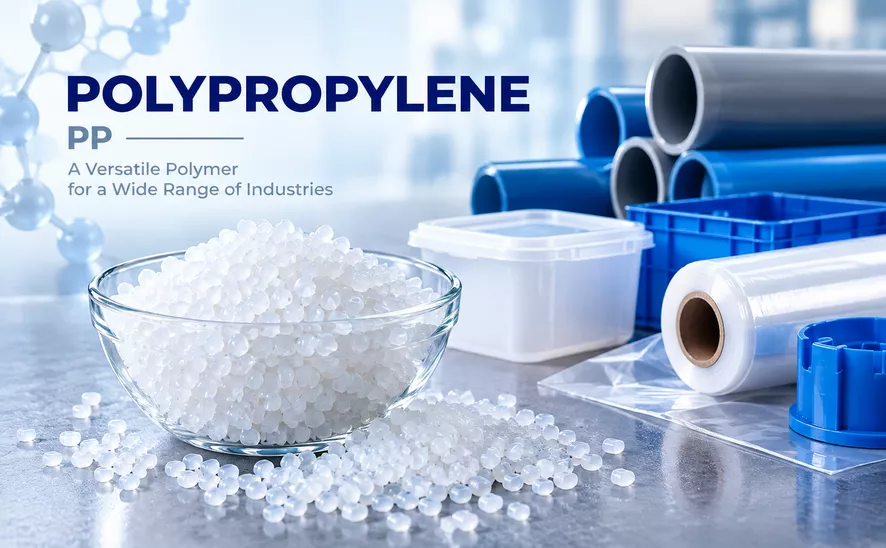
Propylene is an important chemical raw material widely used across the petrochemical industry. It belongs to the olefin family and is obtained through processes such as petroleum refining and ethylene production. Due to its versatility, propylene serves as a key building block for manufacturing a wide range of industrial products and materials.
In the following sections, we will explore propylene, its industrial importance, and the main applications and benefits it offers across different industries.
What Is Polypropylene?
Polypropylene(PP) is a widely used synthetic polymer produced from propylene. It is one of the most common plastics in the world and is valued for its lightweight nature, good chemical resistance, durability, and versatility.
Its interesting to know that The Chemical Structure of Polypropylene consists of repeating units derived from propylene molecules. Its polymer chain contains a carbon backbone with methyl groups attached to alternating carbon atoms. The Propylene formula is C₃H₆.
Is Polypropylene a Thermoplastic?
Yes, polypropylene is a thermoplastic. This means it can be heated until it softens or melts and then cooled to become solid again without fundamentally changing its chemical structure. This property makes PP suitable for processing methods such as injection molding, extrusion, thermoforming, and blow molding.
| Property | Specification |
|---|---|
| Chemical Name | Polypropylene |
| Abbreviation | PP |
| Chemical Formula | (C₃H₆) |
| Monomer | Propylene (C₃H₆) |
| Polymer Structure | Repeating propylene units with a carbon backbone and methyl groups |
| Polymer Type | Thermoplastic Polymer |
| Density | Approximately 0.90–0.91 g/cm³ |
| Melting Point | Approximately 160–170°C |
| Glass Transition Temperature | Approximately −20°C |
| Water Absorption | Very Low |
| Chemical Resistance | Good resistance to many acids, bases, and chemicals |
| Electrical Properties | Good electrical insulation |
| Moisture Resistance | Excellent |
| Recyclability | Yes, commonly identified by recycling code 5 |
| Common Applications | Packaging, automotive parts, textiles, household products, pipes, and medical products |
What is the melting point of polypropylene?
The melting point of polypropylene is typically around 160–170°C, although the exact value depends on the PP grade and molecular structure.
History
Polypropylene was developed in the 1950s following advances in polymerization technology. Scientists Giulio Natta and Karl Ziegler played an important role in developing catalysts that made the commercial production of polypropylene possible. Since then, PP has become a major industrial plastic because of its combination of performance, low weight, and relatively cost-effective production.
How Is Polypropylene Manufactured?
PP is produced through the polymerization of propylene, a hydrocarbon obtained mainly from petrochemical processes. During manufacturing, propylene molecules are linked together to form long polymer chains. The production process and catalyst system used can be adjusted to obtain different PP grades with specific properties for applications such as injection molding, films, fibers, and packaging.
Polypropylene Polymerization Process
The production of polypropylene begins with purified propylene as the main monomer. In the polymerization reactor, propylene molecules react in the presence of a catalyst and form long chains of polypropylene. Temperature, pressure, catalyst type, and reaction conditions are carefully controlled to achieve the desired molecular structure and properties. After polymerization, the polymer is separated, stabilized with additives when required, and converted into pellets for further processing.
PP Polymerization Technologies
- Ziegler–Natta Catalysts: Widely used catalysts that provide good control over polypropylene structure and are suitable for producing different PP grades.
- Metallocene Catalysts: Advanced catalysts that offer precise control over polymer structure and can produce PP with specific performance characteristics.
- Loop Reactors: Commonly used for liquid-phase polymerization and efficient production of polypropylene homopolymers and copolymers.
- Gas-Phase Reactors: Use gaseous propylene for polymerization and are widely applied in modern PP production plants.
- Multiple-Reactor Systems: Combine different reactor technologies to produce polypropylene with customized molecular structures and properties.
- Copolymerization Technologies: Allow manufacturers to produce random copolymers and impact copolymers with improved flexibility, toughness, or impact resistance.
Main Polypropylene Production Methods
Several industrial processes are used to manufacture polypropylene. The main methods include bulk (liquid-phase) polymerization, gas-phase polymerization, and slurry polymerization. Modern plants may also combine different reactor technologies to produce PP grades with a broader range of properties. The selected process depends on the desired polymer grade, production capacity, and required product characteristics.

Types of Polypropylene
- PP Homopolymer(PP-H): Made from propylene as the only monomer. It offers high stiffness, strength, and good chemical resistance and is widely used in rigid products and packaging.
- PP Random Copolymer(PP-R): Produced by polymerizing propylene with a small amount of another monomer, usually ethylene. It provides better clarity, flexibility, and impact resistance than homopolymer PP.
- PP Impact Copolymer: Designed with a rubber phase to improve impact strength and toughness, particularly at lower temperatures. It is commonly used for automotive parts, containers, and durable products.
- PP Block Copolymer: Contains blocks of different polymer structures within the same material, providing a balance of stiffness and impact resistance for demanding applications.
- PP Terpolymer: Produced using three different monomers to achieve specific combinations of flexibility, impact resistance, clarity, or sealing performance.
- Expanded Polypropylene (EPP): A lightweight, closed-cell form of polypropylene foam known for its excellent energy absorption and impact resistance. It is used in protective packaging, automotive components, and lightweight products.
| Type | Main Characteristics | Advantages | Common Applications |
|---|---|---|---|
| PP Homopolymer (PP-H) | High stiffness and strength | Good chemical resistance and rigidity | Packaging, containers, automotive parts |
| PP Random Copolymer (PP-R) | More flexible and transparent | Good impact resistance and clarity | Pipes, packaging, medical products |
| PP Impact Copolymer | High toughness and impact resistance | Excellent durability, especially at low temperatures | Automotive parts, containers, appliances |
| PP Block Copolymer | Balanced stiffness and toughness | Good impact strength and mechanical performance | Automotive components, industrial products |
| PP Terpolymer | Combination of three monomers | Customizable flexibility, clarity, and sealing properties | Films, packaging, specialty applications |
| Expanded Polypropylene (EPP) | Lightweight closed-cell foam | Excellent energy absorption and impact resistance | Protective packaging, automotive parts, sports products |
What is the difference between PP homopolymer and copolymer?
PP homopolymer generally provides higher stiffness and strength, while copolymer grades are modified to improve properties such as flexibility, impact resistance, or clarity. The best choice depends on the intended application.
Applications of Polypropylene
- Packaging
- Food Packaging
- Automotive Parts
- Household Products
- Medical Applications
- Textiles and Nonwoven Products
- Pipes and Fittings
- Electrical and Electronics Applications
- Consumer Products
Disadvantages of PP
So far, we have mainly discussed the advantages of PP, but polypropylene also has some limitations. It has relatively low resistance to UV radiation and can degrade when exposed to prolonged sunlight. PP also has limited resistance to high temperatures compared with some engineering plastics and can become brittle at very low temperatures. In addition, its surface has relatively low adhesion, which can make painting, printing, or bonding more difficult without proper surface treatment.
PP vs other polymer
Polypropylene, polyethylene, polyvinyl chloride (PVC), polyethylene terephthalate, and polystyrene are widely used thermoplastic polymers, but each has different properties and applications. PP is known for its low density, good chemical resistance, moisture resistance, and balanced mechanical performance. PE generally offers excellent flexibility and chemical resistance, while PET is valued for its strength, transparency, and barrier properties.
PVC provides good durability, chemical resistance, and versatility, while PS is commonly selected for its rigidity, ease of processing, and low cost. The most suitable polymer therefore depends on factors such as mechanical strength, temperature resistance, chemical exposure, transparency, flexibility, and the intended application.
| Property | PP | PE | PET | PVC | PS |
|---|---|---|---|---|---|
| Full Name | Polypropylene | Polyethylene | Polyethylene Terephthalate | Polyvinyl Chloride | Polystyrene |
| Density | Low | Low | Moderate | Moderate to High | Moderate |
| Flexibility | Moderate | High to Moderate | Low to Moderate | Low to Moderate | Low |
| Chemical Resistance | Excellent | Excellent | Good | Excellent | Moderate |
| Moisture Resistance | Excellent | Excellent | Good | Good | Good |
| Impact Resistance | Good | Good to Excellent | Good | Good | Low to Moderate |
| Transparency | Good in selected grades | Usually Low to Moderate | Excellent | Good in selected grades | Excellent |
| Common Applications | Packaging, automotive, textiles, containers | Films, bottles, pipes, containers | Bottles, food packaging, fibers | Pipes, cables, flooring, construction products | Packaging, disposable products, insulation |
Major Polypropylene Producers Worldwide
Polypropylene is produced on a large scale by major petrochemical and polymer companies across Asia, the Middle East, Europe, and the Americas. The global producer landscape includes integrated energy and chemical companies as well as specialized polyolefin manufacturers. Companies such as SABIC, LyondellBasell, Braskem, and ExxonMobil maintain established polypropylene portfolios covering homopolymers, random copolymers, impact copolymers, and specialty grades.
The exact PP grades and trade names differ between producers and markets. For example, SABIC offers homo, random, and impact PP as well as PP compounds, while LyondellBasell supplies homopolymer, random copolymer, and specialty PP grades. Braskem and ExxonMobil also maintain broad PP portfolios for applications including packaging, automotive components, films, fibers, healthcare, and consumer products.
| Company | Country / Region | Main Polypropylene Products |
|---|---|---|
| SABIC | Saudi Arabia / Global | Homopolymer PP, Random Copolymer PP, Impact Copolymer PP, PP Compounds |
| LyondellBasell | Netherlands / USA / Global | Homopolymer PP, Random Copolymer PP, Impact Copolymer PP, Specialty PP |
| Braskem | Brazil / Americas / Global | Homopolymer PP, Copolymer PP, PP Compounds, Specialty PP |
| ExxonMobil | USA / Global | Homopolymer PP, Impact Copolymer PP, Random Copolymer PP, High-Performance PP |
| Borealis | Austria / Europe / Global | PP Resins, PP Compounds, Fiber-Reinforced PP, Healthcare PP |
| Reliance Industries | India / Asia | Polypropylene (Repol), Specialty PP, Recycled PP |
| Sinopec | China / Asia | Polypropylene Resins, Homopolymer PP, Copolymer PP |
| PetroChina | China / Asia | Polypropylene Resins for Packaging, Automotive, Fibers, and Industrial Applications |
| Borouge | UAE / Middle East & Asia | Polypropylene and Advanced Polyolefin Solutions |
| INEOS | Europe / Global | Polypropylene Grades for Packaging, Automotive, Consumer, and Industrial Applications |
| Jam Petrochemical | IRAN / Middle East & Asia | Homopolymer PP, Random Copolymer PP, Impact Copolymer PP |
| Marun Petrochemical | IRAN / Middle East & Asia | Homopolymer PP, Copolymer PP |
Purchase Polypropylene
Purchasing polypropylene requires selecting the appropriate grade based on the intended application, processing method, and required technical properties. Buyers should consider factors such as homopolymer or copolymer type, melt flow rate, packaging, required quantity, destination, and delivery terms. Working with an experienced supplier can also help ensure that the selected PP grade matches the technical and commercial requirements of the application.
Polypropylene Price
The price of polypropylene is influenced by both global petrochemical market conditions and the specific characteristics of the product being purchased. PP prices can vary according to grade, origin, order volume, market conditions, packaging, and delivery terms. Therefore, obtaining a current quotation based on the exact grade, quantity, and destination is the most reliable way to determine the final purchase price.
What Affects Polypropylene Price?
- PP Grade: Different grades, such as homopolymer, random copolymer, and impact copolymer, can have different prices depending on their formulation and performance.
- Melt Flow Rate: The required melt flow characteristics can affect the grade selection and consequently the price.
- Order Quantity: Larger commercial orders may receive more competitive pricing due to economies of scale.
- Crude Oil and Propylene Prices: Since polypropylene is produced from petrochemical feedstocks, changes in crude oil and propylene markets can influence PP prices.
- Market Supply and Demand: Regional availability, production levels, and changes in demand can cause polypropylene prices to fluctuate.
- Origin and Manufacturer: The producer, country of origin, and product reputation may affect the commercial price of a specific PP grade.
- Packaging: Packaging format, such as bags, jumbo bags, or other bulk options, can influence the overall cost.
- Shipping and Delivery Terms: Freight costs, destination, Incoterms, and delivery arrangements can significantly affect the final landed cost.
Looking for a reliable polypropylene supplier? Chemical Raw Material Supplier supplies PP grades to customers in more than 60 countries. Contact our sales team with your required grade, quantity, and destination to receive a current quotation.
Proforma Invoice for PP
When purchasing imported polypropylene, buyers may request a proforma invoice to review the commercial terms before confirming an order. This preliminary document generally contains important information such as the PP grade and specification, quantity, unit price, packaging, payment terms, delivery conditions, and other transaction details. It allows the buyer to review the proposed purchase and can also support import procedures, banking arrangements, and customs clearance.
If you need a proforma invoice for Polypropylene, Nowfel FZC can prepare the required commercial documentation according to your purchasing requirements. By providing details such as the desired PP grade, quantity, destination, and preferred delivery terms, you can receive a quotation and proforma invoice tailored to your order.
Why Choose Us as Your Polypropylene Supplier?
- Wide Range of PP Grades: We can supply different polypropylene grades according to application and processing requirements.
- Application-Based Grade Selection: Our team can help identify a suitable PP grade based on factors such as processing method, MFR, mechanical performance, and end use.
- International Supply: We support polypropylene procurement for customers in different markets and destinations.
- Flexible Order Quantities: Supply arrangements can be discussed according to the buyer’s required volume and purchasing needs.
- Commercial Documentation: We can provide quotations and proforma invoices with the necessary product and transaction details.
- Reliable Communication: Our sales team assists buyers throughout the quotation and ordering process, from initial product selection to delivery arrangements.
- Competitive Commercial Terms: We aim to provide suitable polypropylene options based on current market conditions, product specifications, and order requirements.
For more information or to purchase Polypropylene, feel free to contact us by email. Our sales and support team will get back to you as soon as possible and assist you with your requirements.
Frequently Asked Questions