
Nowfel Insights
Methanol: Properties, Uses, Types, Price and Purchase

What Is Methanol?
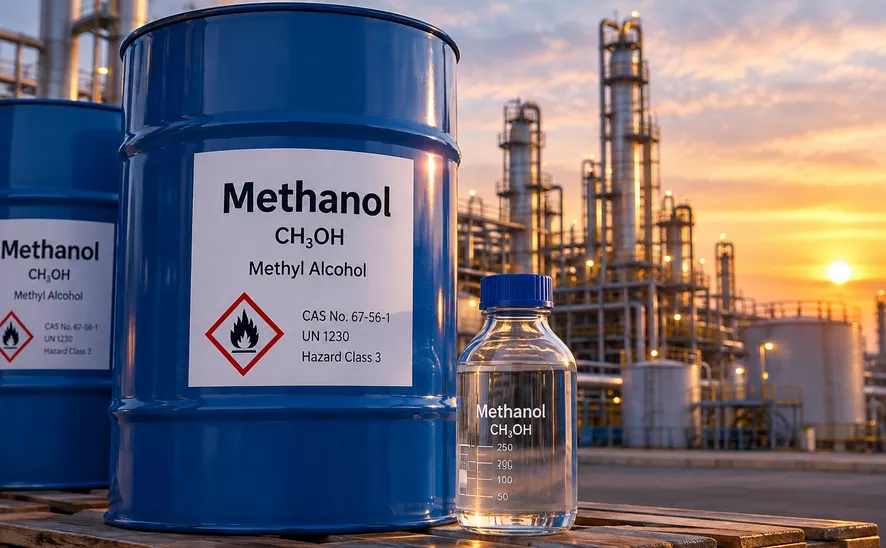
Methanol is a simple, colorless, volatile, and highly flammable alcohol with the chemical formula CH₃OH. It is also known as methyl alcohol and wood alcohol. Methanol is a toxic chemical that requires careful handling and appropriate industrial safety measures.
| Methanol Chemical Properties | |
|---|---|
| Chemical Name | Methanol |
| Other Names | Methyl Alcohol, Wood Alcohol, Carbinol |
| Chemical Formula | CH₃OH |
| Structure | CH₃–OH |
| CAS Number | 67-56-1 |
| Molar Mass | 32.04 g/mol |
| Density | Approximately 0.792 g/cm³ at 20°C |
| Melting Point | −97.6°C |
| Boiling Point | 64.7°C |
| Appearance | Colorless liquid |
| Odor | Characteristic alcoholic odor |
| Solubility | Completely miscible with water |
| Flash Point | Approximately 11°C |
| Autoignition Temperature | Approximately 464°C |
| pH | Not applicable for pure methanol |
| HS Code | 2905.11 |
| Antidote | Fomepizole; ethanol may also be used under medical supervision |
| Hazard Classification | Highly flammable and toxic |
History
Methanol has been known since ancient times through the destructive distillation of wood, which led to its traditional name, wood alcohol. In the 19th century, methanol was isolated and identified as a distinct chemical compound. Modern methanol is primarily produced industrially from synthesis gas (syngas), rather than from wood.
what are 10 common uses of methanol?
10 common uses of methanol include:
- Formaldehyde production: A major feedstock for manufacturing formaldehyde, resins, and plastics.
- Solvent: Used as an industrial solvent in paints, coatings, adhesives, and chemical processing.
- Fuel: Used as a fuel or fuel component in certain industrial and energy applications.
- Biodiesel production: Used in the transesterification process to produce biodiesel from vegetable oils and animal fats.
- Acetic acid production: Used as a feedstock for producing acetic acid and other chemicals.
- Antifreeze and de-icing fluids: Used in some industrial formulations because of its low freezing point.
- Windshield washer fluids: Used in certain automotive cleaning and de-icing formulations.
- Dimethyl ether production: Methanol is used as a feedstock for producing dimethyl ether.
- Methylamines production: Used to manufacture methylamines and other chemical intermediates.
- Wastewater and denitrification: Used as a carbon source in some industrial and municipal biological wastewater-treatment processes.
Methanol Grades
Methanol is available in different grades depending on its purity, intended use, and required specifications. Common grades include industrial grade, fuel grade, and high-purity methanol, with each grade designed to meet different technical and quality requirements.
Industrial Grade
Industrial-grade methanol is commonly supplied for general chemical and manufacturing processes where extremely high purity is not required. Its specifications typically focus on methanol content, water content, acidity, color, and other impurities. It is widely traded in bulk quantities for industrial processing and chemical manufacturing.
High-Purity
High-purity methanol has a very low level of impurities and is used where tighter chemical specifications are required. It is commonly available in laboratory, analytical, electronic, and specialized chemical grades. Depending on the grade, specifications may control trace metals, water, non-volatile residues, and other contaminants.
What Is the Difference Between Industrial-Grade and High-Purity Methanol?
Industrial-grade methanol is intended for general industrial processes and allows specified levels of impurities. High-purity methanol has much tighter impurity limits and is used where low levels of contaminants are important, such as laboratory, analytical, and specialized chemical applications.
Fuel Grade
Fuel-grade methanol is produced to meet specifications required for fuel and energy applications. In addition to methanol purity, parameters such as water content, acidity, and contaminants are important because they can affect combustion performance and equipment compatibility. The exact specification may vary according to the fuel application and applicable standards.
| Comparison of Methanol Grades | |||
|---|---|---|---|
| Grade | Typical Purity | Key Characteristics | Common Applications |
| Industrial Grade | Typically ≥99% | Suitable for general industrial processes; controlled levels of common impurities | Chemical manufacturing, solvents, formaldehyde production, industrial processing |
| Fuel Grade | Typically high purity; specification varies by application | Controlled water content and impurities for fuel-related applications | Fuel, energy applications, fuel blending |
| High-Purity Grade | Typically ≥99.9% | Low levels of water, metals, and other trace impurities | Laboratory analysis, electronics, pharmaceutical and specialty chemical applications |
What Is the Difference Between Ethanol and Methanol?
As mentioned earlier, methanol is a simple alcohol with the chemical formula CH₃OH, primarily used as an industrial chemical and chemical feedstock. It is highly toxic and must not be consumed. Ethanol, with the chemical formula C₂H₅OH, is also an alcohol but has different chemical and physical properties and is the type of alcohol found in alcoholic beverages.
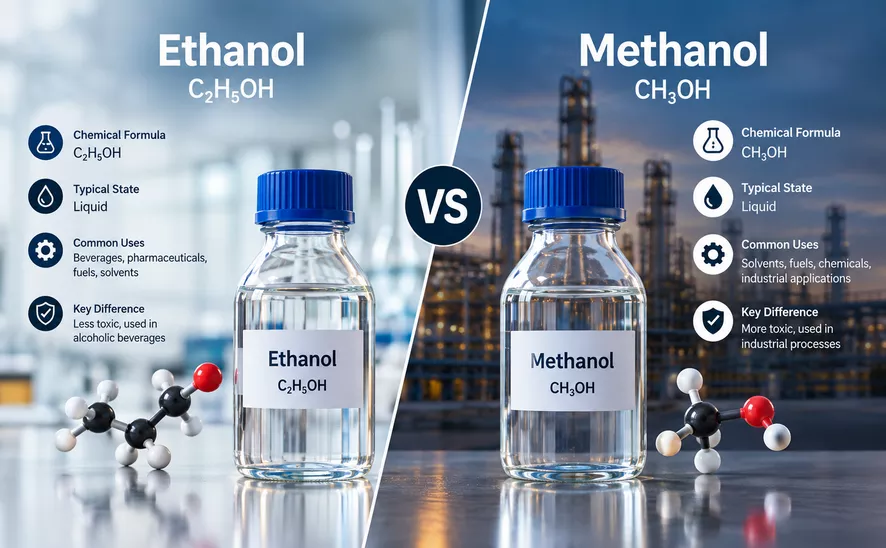
The main difference between methanol and ethanol is their molecular structure, toxicity, and typical applications. Methanol contains one carbon atom, while ethanol contains two. Although both are colorless and flammable liquids, methanol is significantly more toxic and can cause severe poisoning, including blindness and death, if ingested. Ethanol is also toxic at high concentrations, but appropriately produced food-grade ethanol is used in beverages and various food, pharmaceutical, and industrial applications.
| Methanol vs Ethanol | ||
|---|---|---|
| Property | Methanol | Ethanol |
| Chemical Name | Methanol | Ethanol |
| Other Names | Methyl Alcohol, Wood Alcohol | Ethyl Alcohol, Grain Alcohol |
| Chemical Formula | CH₃OH | C₂H₅OH |
| Molar Mass | 32.04 g/mol | 46.07 g/mol |
| Number of Carbon Atoms | 1 | 2 |
| Boiling Point | 64.7°C | 78.37°C |
| Density at 20°C | Approximately 0.792 g/cm³ | Approximately 0.789 g/cm³ |
| Appearance | Colorless liquid | Colorless liquid |
| Flammability | Highly flammable | Highly flammable |
| Toxicity | Highly toxic; ingestion can cause blindness or death | Lower toxicity than methanol, but harmful in excessive amounts |
| Common Uses | Chemical manufacturing, solvents, fuels, biodiesel production | Beverages, solvents, disinfectants, pharmaceuticals, fuels |
| Food Use | Not suitable for consumption | Food-grade ethanol can be used in alcoholic beverages and food applications |
Methanol vs. Other Chemicals
Methanol is often compared with other important industrial chemicals because they can share related applications, feedstocks, or roles in chemical manufacturing, energy, and industrial processes. However, methanol has distinct chemical properties, physical characteristics, and industrial functions compared with ethanol, acetone, toluene, ammonia, and hydrogen. The table below provides a quick comparison of methanol with these chemicals, focusing on their chemical composition, physical state, main applications, and typical industrial roles.
| Methanol vs. Other Chemicals | ||||
|---|---|---|---|---|
| Comparison | Chemical Formula | Typical State at Room Temperature | Main Uses | Key Difference from Methanol |
| Ethanol | CH3CH2OH vs CH3OH | Liquid vs Liquid | Solvents, beverages, pharmaceuticals, fuels vs Solvents, fuels, chemical manufacturing | Ethanol contains two carbon atoms, while methanol contains one carbon atom and is significantly more toxic. |
| Acetone | C3H6O vs CH3OH | Liquid vs Liquid | Solvents, coatings, plastics, chemical processing vs Solvents, chemical production, fuels | Acetone is a ketone, while methanol is a simple alcohol. |
| Toluene | C7H8 vs CH3OH | Liquid vs Liquid | Solvents, paints, coatings, chemical production vs Solvents, fuels, chemical manufacturing | Toluene is an aromatic hydrocarbon, while methanol is an oxygen-containing alcohol. |
| Ammonia | NH3 vs CH3OH | Gas vs Liquid | Fertilizers, refrigeration, chemical production vs Solvents, fuels, chemical manufacturing | Ammonia is a nitrogen-containing compound, while methanol is an oxygen-containing alcohol. |
| Hydrogen | H2 vs CH3OH | Gas vs Liquid | Fuel, refining, chemical production vs Solvents, fuels, chemical manufacturing | Hydrogen is a diatomic element, while methanol is a carbon-containing organic compound and alcohol. |
| Natural Gas | Primarily CH4 vs CH3OH | Gas vs Liquid | Fuel, heating, electricity generation vs Solvents, fuels, chemical manufacturing | Natural gas is primarily a mixture of hydrocarbons, while methanol is a defined oxygen-containing chemical compound. |
Purchase Methanol
Methanol can be purchased in bulk for industrial and commercial requirements, with supply arrangements typically based on the required grade, quantity, packaging, destination, and delivery terms. Buyers should confirm the product specification and applicable shipping requirements before placing an order, particularly for international shipments of hazardous chemicals.
Methanol Price
Methanol prices vary according to market conditions, product specification, order volume, origin, packaging, and destination. International freight, insurance, taxes, duties, and the selected Incoterm can also affect the final delivered cost. For an accurate quotation, buyers should provide the required grade, quantity, destination, and preferred delivery terms.
What Affects Methanol Price?
- Methanol grade and purity
- Order quantity and contract volume
- Market supply and demand
- Feedstock and energy costs
- Origin and supplier location
- Packaging type and size
- Freight and transportation costs
- Destination and import requirements
- Incoterms and delivery terms
- Taxes, duties, and other import-related costs
Looking for a reliable methanol supplier? Chemical Trading Company supplies methanol to customers in more than 60 countries. Contact our sales team with your required specification, quantity, and destination to receive a current quotation.
Proforma Invoice for Methanol
When purchasing imported methanol, buyers may request a proforma invoice to review the commercial terms before confirming an order. This preliminary document typically includes the methanol grade and specification, quantity, unit price, packaging, payment terms, delivery conditions, and other relevant transaction details. It provides the buyer with a clear overview of the proposed purchase and can also support banking, import, and customs procedures.
If you need a proforma invoice for methanol, Nowfel FZC can prepare the required commercial documentation according to your purchasing requirements. By providing details such as the required grade, quantity, destination, and preferred delivery terms, you can receive a quotation and proforma invoice tailored to your order.
Why Choose Us as Your Methanol Supplier?
- International supply: Methanol supply for customers in multiple global markets.
- Bulk quantities: Suitable for commercial and industrial purchasing requirements.
- Flexible specifications: Supply according to the required grade and product specification.
- Export support: Assistance with commercial documentation and international delivery arrangements.
- Quotation based on your requirements: Pricing is prepared according to quantity, destination, and delivery terms.
For more information or to purchase methanol, feel free to contact us by email. Our sales and support team will be happy to assist with your product requirements, quotation, and delivery arrangements.
Safety and Handling
Methanol is a highly toxic and highly flammable chemical that requires appropriate handling, storage, and workplace controls. Exposure can occur through ingestion, inhalation, or skin contact. Methanol should be handled in well-ventilated areas using suitable protective equipment, and contact with ignition sources, heat, and incompatible chemicals should be avoided.
Methanol should be stored in tightly closed, clearly labeled containers in a cool, well-ventilated area away from heat, sparks, flames, and oxidizing agents. During handling, appropriate chemical-resistant gloves, eye protection, and protective clothing should be used. Any spill or suspected exposure should be managed according to the applicable safety data sheet and emergency procedures.
Is Methanol Toxic to Humans?
Yes. Methanol is highly toxic to humans. Ingestion or significant exposure can cause serious poisoning, including metabolic acidosis, visual impairment or blindness, neurological damage, and potentially death. Suspected methanol poisoning requires immediate emergency medical attention.
How Do Refineries and Petrochemical Plants Supply the Chemical Industry?
Disease
Methanol poisoning, or methanol intoxication, is a serious toxic condition caused by exposure to methanol. The body metabolizes methanol into toxic compounds, particularly formic acid, which can interfere with cellular energy production and cause metabolic acidosis and damage to the optic nerve. Symptoms may initially be delayed and can include headache, dizziness, nausea, abdominal pain, visual disturbances, confusion, and, in severe cases, loss of consciousness or death. Rapid medical treatment is essential; specific antidotal therapy may include fomepizole, with additional treatment determined by medical professionals.
Frequently Asked Questions