Nowfel Insights
Ammonia: Properties, Uses, Production, and Industrial Applications

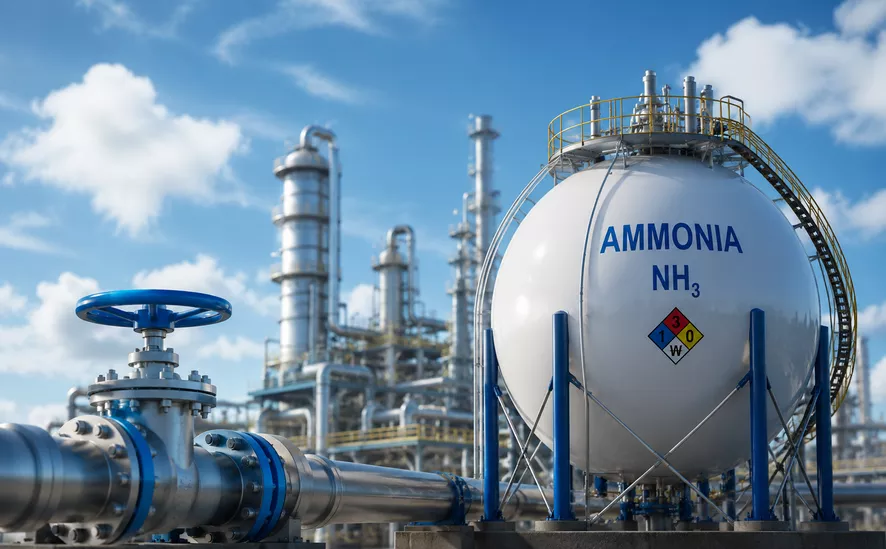
Ammonia is one of those chemicals that may feel familiar long before you know its name. Its sharp, distinctive smell can sometimes be noticed in bathrooms or cleaning environments, but the story of ammonia goes far beyond that unpleasant odor. Behind this simple-smelling compound is one of the most important chemicals in modern industry.
what is ammonia?
Ammonia or azane is a simple chemical compound made of nitrogen and hydrogen. Its chemical formula is NH₃, meaning each ammonia molecule contains one nitrogen atom and three hydrogen atoms. At room temperature, ammonia is a colorless gas with a strong, sharp odor and is highly soluble in water. It is widely used in fertilizer production, refrigeration, chemical manufacturing, and many other industrial applications.
Ammonia Properties
Ammonia has several distinctive Physical Properties of Ammonia that make it important for industrial applications. It is a colorless gas at room temperature with a strong, pungent Ammonia Odor and Appearance. Its Ammonia Boiling Point and Melting Point are approximately −33.3°C and −77.7°C, respectively, and its Ammonia Density as a gas is lower than that of air. Another important characteristic is Ammonia Solubility in Water; ammonia dissolves very easily in water, forming an alkaline solution.
The Chemical Properties of Ammonia are equally important. Ammonia(NH₃) is a polar compound and behaves as a weak base because it can react with water and accept a proton. It can also react with acids to form ammonium salts. These properties make ammonia useful in fertilizer production, chemical manufacturing, refrigeration, and water treatment.
| Property | Ammonia |
|---|---|
| Chemical Name | Ammonia |
| Other Names | Azane, Hydrogen Nitride |
| Chemical Formula | NH3 |
| CAS Number | 7664-41-7 |
| Molecular Weight | 17.03 g/mol |
| Appearance | Colorless gas |
| Odor | Strong, pungent odor |
| Boiling Point | -33.3 °C |
| Melting Point | -77.7 °C |
| Density (Gas, at 0 °C) | 0.771 g/L |
| Solubility in Water | Highly soluble |
| pH (Aqueous Solution) | Alkaline |
| Flammability | Flammable |
| Autoignition Temperature | Approximately 651 °C |
| Critical Temperature | 132.4 °C |
| Critical Pressure | 113.5 bar |
| Polarity | Polar |
| Odor Threshold | Very low |
| State at Room Temperature | Gas |
Is Ammonia NH₃ or 4?
Ammonia is NH₃, not NH₄. NH₃ is the chemical formula of ammonia, while NH₄⁺ is called the ammonium ion, which forms when ammonia accepts a hydrogen ion (H⁺). In fact, ammonia is like a reactive gas that, when it gets saturated (gaining an extra hydrogen), turns into the more stable ammonium ion, which no longer has the gas’s pungent odor and is usually found dissolved in fertilizers or liquids.
history
Ammonia has been known for centuries, but its importance grew rapidly with the development of industrial production. In the early 20th century, the Haber-Bosch process made it possible to produce ammonia on a large scale by combining nitrogen and hydrogen.
Types of Ammonia
- Anhydrous Ammonia: Ammonia that contains little or no water, typically handled as a pressurized or refrigerated liquid and widely used in fertilizers and industrial applications.
- Aqueous Ammonia: Ammonia dissolved in water, also known as ammonia water or ammonium hydroxide solution, commonly used in cleaning, chemical processing, and water treatment.
- Green Ammonia: Ammonia produced using hydrogen from renewable energy and electricity, with very low or potentially near-zero carbon emissions during production.
- Blue Ammonia: Ammonia produced mainly from natural gas, with carbon dioxide emissions captured and stored or utilized through carbon capture technology.
- Gray Ammonia: Conventionally produced ammonia, usually from natural gas, where the carbon dioxide generated during production is released into the atmosphere.
- Turquoise Ammonia: Ammonia produced using hydrogen from natural gas through methane pyrolysis, with carbon mainly removed as solid carbon instead of being released as CO₂.
How Is Ammonia Produced?
Haber-Bosch Process
The Haber-Bosch process is the main industrial method used to produce ammonia. In this process, nitrogen (N₂) from the air reacts with hydrogen (H₂) at high pressure and temperature in the presence of a catalyst to form ammonia (NH₃). The basic reaction is N₂ + 3H₂ → 2NH₃.
After synthesis, the ammonia is cooled and separated, while unreacted nitrogen and hydrogen are recycled back into the process.
Main Feedstocks for Ammonia Production
The two main feedstocks required for ammonia production are nitrogen and hydrogen. Nitrogen is obtained from air, while hydrogen is commonly produced from natural gas, although other sources such as coal, water electrolysis, and renewable energy can also be used. The choice of hydrogen source has a major impact on the carbon emissions and overall environmental footprint of ammonia production.
Hydrogen Production for Ammonia
Hydrogen is a key raw material in ammonia production. In conventional plants, hydrogen is mainly produced from natural gas through steam methane reforming (SMR), where methane reacts with steam at high temperatures. The process produces hydrogen along with carbon dioxide (CO₂). In low-carbon ammonia production, hydrogen can instead be produced through water electrolysis, using electricity from renewable sources such as solar or wind.
Nitrogen Production for Ammonia
Nitrogen is separated from atmospheric air because air contains approximately 78% nitrogen. Industrial ammonia plants typically use an air separation process to obtain high-purity nitrogen. The nitrogen is then combined with hydrogen in the ammonia synthesis loop to produce NH₃.
Ammonia Synthesis
During ammonia synthesis, purified nitrogen and hydrogen are mixed in the required ratio and passed through a catalyst under high pressure and temperature. The gases react to form ammonia, which is then cooled so it can be separated from the unreacted gases. Because the reaction does not convert all the feed gases in a single pass, the remaining nitrogen and hydrogen are recycled to improve overall efficiency.
Ammonia Production Flow
A typical ammonia production process can be summarized as
feedstock preparation → hydrogen production → nitrogen separation → gas purification → ammonia synthesis → cooling and separation → recycling.
In conventional plants, natural gas is usually the main hydrogen source, while green ammonia plants use renewable electricity and water electrolysis to produce hydrogen.
What Is Ammonia Used For?
- Fertilizer Production
- Agriculture
- Refrigeration
- Chemical Manufacturing
- Water Treatment
- Mining
- Pharmaceutical Manufacturing
- Hydrogen Carrier
- Marine Fuel
Ammonia Purchase
When purchasing ammonia, buyers should consider the required grade, purity, packaging or delivery method, order volume, and destination. Choosing a reliable supplier is important to ensure consistent quality, safe transportation, and dependable delivery for industrial or commercial applications.
Price
Ammonia prices vary by region, grade, supply conditions, and order volume. Market prices can change frequently, so buyers should request a current quotation based on their specific requirements.
What Affects Ammonia Price?
- Natural gas prices: Hydrogen production costs strongly influence ammonia pricing.
- Energy costs: Electricity and fuel prices affect overall production expenses.
- Supply and demand: Market availability and seasonal demand can cause price changes.
- Production method: Green, blue, and conventional ammonia can have different cost structures.
- Transportation: Shipping distance, storage, and handling requirements affect the delivered price.
- Order volume: Larger quantities may receive more competitive pricing.
Need a reliable source for your ammonia requirements? Nowfel Chemical Exporter works with established producers to arrange ammonia supply for customers in international markets. Share your required grade, volume, and destination with our sales team to receive a tailored quotation.
Why Choose Us as Your Ammonia Supplier?
- Verified Supply Network: Access to established ammonia producers and reliable supply channels.
- Product Quality: Ammonia supplied according to the required grade and agreed specifications.
- Flexible Volumes: Suitable supply options for different order sizes and project requirements.
- International Logistics: Coordinated shipping solutions for destinations across global markets.
- Professional Support: Assistance with product selection, documentation, and commercial requirements.
- Competitive Offers: Market-based quotations tailored to the customer’s purchasing needs.
- Long-Term Cooperation: A customer-focused approach designed to support ongoing industrial supply requirements.
For more information or to purchase ammonia, feel free to contact us by email. Our sales and support team will get back to you as soon as possible and assist you with your requirements.
Ammonia Safety and Handling
Ammonia requires careful handling because it is a toxic, corrosive, and irritating substance, particularly at high concentrations. Direct contact with liquid ammonia or concentrated solutions can damage the skin and eyes, while inhaling ammonia gas can irritate the nose, throat, and lungs.
Ammonia should therefore be stored in suitable, well-ventilated areas and handled with appropriate protective equipment. Proper leak detection, ventilation, storage procedures, and emergency response measures are essential when working with ammonia in industrial environments.
Ammonia Environmental Impact
Ammonia can affect the environment through both its production and release. Conventional ammonia production can generate significant CO₂ emissions, while excess ammonia emissions may contribute to air, soil, and water pollution. Green ammonia, produced using renewable energy, can help reduce the environmental impact of ammonia production.
Toxicology and Metabolism
Is Ammonia Toxic? Yes. Ammonia can be toxic when people are exposed to high concentrations, especially through inhalation. Small amounts of ammonia are also naturally produced in the human body during the breakdown of proteins and are normally converted by the liver into urea, which is then removed from the body through urine. The health risk mainly depends on the concentration, route, and duration of exposure.
What Does Ammonia Do for Humans?
At high concentrations, ammonia can irritate or burn tissues that come into contact with it, especially the eyes, skin, throat, and respiratory system. Breathing concentrated ammonia may cause coughing, breathing difficulty, and serious lung irritation. The body normally handles small amounts of internally produced ammonia through the liver’s conversion of ammonia into urea.
Ammonia Disease
There is no single medical condition officially called ammonia disease. Health problems related to ammonia can result from excessive exposure to ammonia gas or, in a different context, abnormally high ammonia levels in the blood, known as hyperammonemia. These situations have different causes and health effects and should not be treated as the same condition.
Symptoms of Ammonia Exposure
Symptoms depend on the level and duration of exposure. Common effects include a strong burning sensation in the eyes, nose, or throat, watery eyes, coughing, throat irritation, and breathing difficulty. More severe exposure can cause chest discomfort, significant respiratory injury, or damage to the eyes and skin.
Ammonia Solution
For contact with ammonia solution, the immediate priority is to stop exposure. Skin or eye contact should be flushed thoroughly with plenty of clean water, while inhalation exposure requires moving to fresh air. If exposure is significant or symptoms such as breathing difficulty, severe eye irritation, or persistent coughing occur, urgent medical attention should be sought.
ammonia vs other chemicals
Ammonia is often compared with other important industrial chemicals because they can share similar applications, feedstocks, or roles in the energy and chemical industries. However, ammonia (NH₃) has distinct properties and uses compared with urea, ammonium nitrate, methanol, hydrogen, and natural gas. The table below provides a quick comparison of their chemical composition, physical state, main applications, and typical industrial roles.
| Comparison | Chemical Formula | Typical State at Room Temperature | Main Uses | Key Difference from Ammonia |
|---|---|---|---|---|
| Urea | NH3 vs CH4N2O | Gas vs Solid | Fertilizers, chemical production vs Fertilizer, agriculture | Ammonia is a simple nitrogen compound and a major feedstock for producing urea. |
| Ammonium Nitrate | NH3 vs NH4NO3 | Gas vs Solid | Fertilizers, refrigeration vs Fertilizer, industrial applications | Ammonium nitrate is an ionic compound produced from ammonia and nitric acid. |
| Methanol | NH3 vs CH3OH | Gas vs Liquid | Fertilizers, chemicals, refrigeration vs Solvents, fuels, chemicals | Ammonia contains nitrogen, while methanol is an oxygen-containing alcohol. |
| Hydrogen | NH3 vs H2 | Gas vs Gas | Fertilizers, chemicals, energy applications vs Fuel, refining, chemical production | Ammonia contains nitrogen and hydrogen and can also serve as a hydrogen carrier. |
| Natural Gas | NH3 vs Mainly CH4 | Gas vs Gas | Fertilizers, refrigeration, chemicals vs Fuel, heating, electricity generation | Ammonia is a nitrogen-based chemical, while natural gas is primarily a hydrocarbon fuel. |
Frequently Asked Questions About Ammonia