Nowfel Insights
Polyethylene (PE): The Complete Guide to Types, Properties, Uses & Price

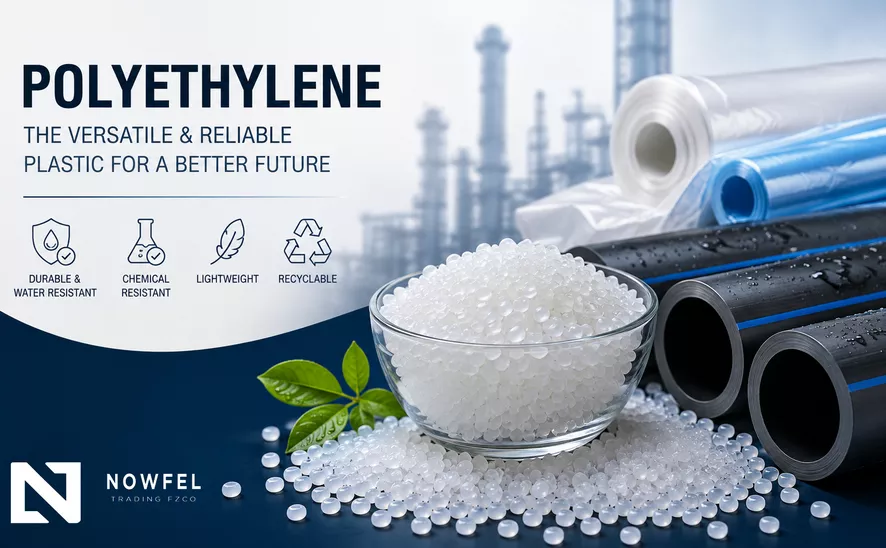
Synthetic materials, especially plastics, have become an essential part of modern life due to their versatility, durability, and cost-effectiveness. Among the many types of plastics available today, polyethylene (PE) is the most widely used, serving as the foundation for countless household, commercial, and industrial products, from packaging films and bottles to pipes, containers, and protective materials.
What is Polyethylene?
Polyethylene(PE) is the world’s most widely used thermoplastic polymer, produced by polymerizing ethylene monomers. Thanks to its lightweight, durability, chemical resistance, and cost-effectiveness, polyethylene has become an essential material in modern manufacturing. It is commonly used to produce packaging films, plastic bottles, pipes, containers, cable insulation, and thousands of other consumer and industrial products.
PE is formed by the polymerization of ethylene (C₂H₄). Since it is a polymer, polyethylene does not have a single molecular formula. Instead, it is represented by its repeating structural unit.
| Chemical Name | Polyethylene (PE) |
|---|---|
| Other Names | Polyethene, PE Plastic, Ethylene Polymer |
| Chemical Formula | (C₂H₄)n |
| Repeating Unit | –CH₂–CH₂– |
| CAS Number | 9002-88-4 |
| Appearance | White or translucent solid pellets |
| Molecular Weight | Variable (Typically 10,000 to over 3,000,000 g/mol) |
| Density | 0.91–0.97 g/cm³ |
| Melting Point | 105–135°C (Depending on PE grade) |
| Boiling Point | Not applicable (Decomposes before boiling) |
| Glass Transition Temperature (Tg) | Approximately −125°C |
| Solubility in Water | Insoluble |
| Chemical Resistance | Excellent resistance to acids, alkalis, and many chemicals |
| Recyclability | Recyclable (Resin Identification Codes #2 and #4) |
| Main Applications | Packaging, pipes, bottles, films, containers, cable insulation, household and industrial products |
History Polyethylene
Polyethylene was first discovered by accident in 1933 by researchers at Imperial Chemical Industries(ICI) in the United Kingdom. Its commercial production began a few years later, and the material quickly gained importance because of its excellent insulating properties during World War II. Since then, continuous technological advancements have led to the development of various polyethylene grades, making PE one of the most versatile and widely consumed plastics in the world.
Polyethylene Chemical Structure
The chemical structure of polyethylene (PE) consists of long chains of repeating ethylene units connected by strong carbon-carbon bonds. This simple structure gives polyethylene its lightweight, durability, flexibility, and excellent chemical resistance, making it suitable for a wide range of applications.
Molecular Structure
Polyethylene is composed of repeating –CH₂–CH₂– units, forming long hydrocarbon chains. Depending on the manufacturing process, these chains can be either highly linear or contain varying degrees of branching. The arrangement of the polymer chains directly influences important properties such as density, flexibility, tensile strength, and chemical resistance.
Polymerization Process
Polyethylene is produced through the polymerization of ethylene(C₂H₄) monomers under controlled temperature, pressure, and catalyst conditions. Different polymerization methods and catalyst systems lead to the production of various polyethylene grades, including HDPE, LDPE, LLDPE, and MDPE, each designed to meet specific industrial and commercial requirements.
Polyethylene Manufacturing Process
Polyethylene is produced by converting ethylene, a hydrocarbon derived mainly from natural gas or crude oil, into long polymer chains. In a simplified process, ethylene molecules are fed into a reactor under controlled temperature, pressure, and catalyst conditions. The resulting polymer is then separated, processed, and converted into small plastic pellets that can be supplied to manufacturers.
The production method and catalyst system determine the molecular structure and properties of the final material. By controlling these conditions, manufacturers can produce different PE grades, such as HDPE, LDPE, and LLDPE, for specific applications.
Types of Polyethylene
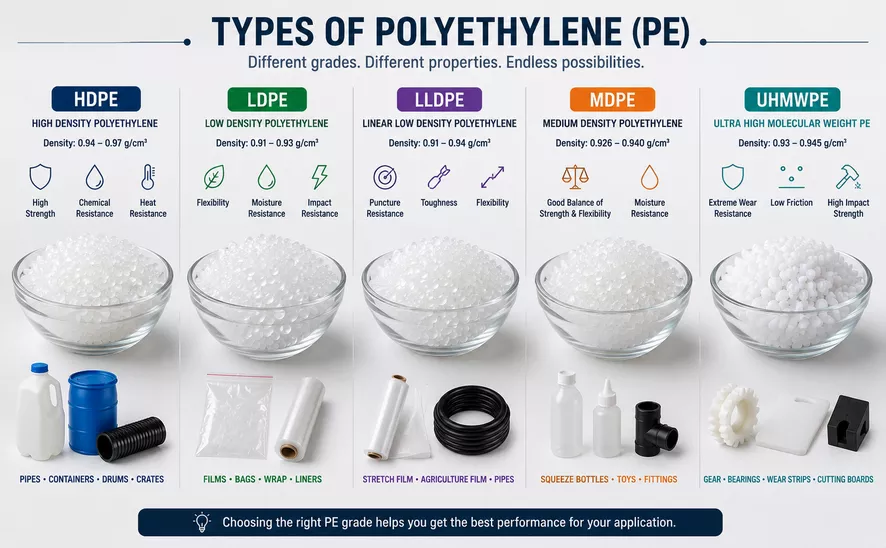
Polyethylene is available in different grades, and each type has unique characteristics based on its molecular structure, density, and manufacturing process.
- High-Density Polyethylene (HDPE): HDPE is a strong and rigid type of polyethylene with a highly linear molecular structure and higher density. It offers excellent chemical resistance, durability, and strength, making it suitable for products such as pipes, containers, bottles, and industrial packaging.
- Low-Density Polyethylene (LDPE): Low-Density Polyethylene is a flexible and lightweight polyethylene grade with a highly branched molecular structure. Its softness, transparency, and excellent processing properties make it widely used in packaging films, plastic bags, coatings, and flexible products.
- Linear Low-Density Polyethylene (LLDPE): Linear Low-Density Polyethylene combines flexibility and strength due to its linear structure with short branches. It provides better tensile strength and puncture resistance compared to traditional LDPE and is commonly used in stretch films, packaging materials, and industrial films.
- Medium-Density Polyethylene (MDPE): MDPE has properties between HDPE and LDPE, offering a balance of strength and flexibility. It is mainly used in applications such as gas pipes, packaging materials, and industrial products where moderate strength and impact resistance are required.
- Ultra-High Molecular Weight Polyethylene (UHMWPE): UHMWPE is a high-performance polyethylene with extremely long polymer chains and exceptional wear resistance. It is used in specialized applications such as medical implants, protective equipment, bearings, and high-performance industrial components.
- Cross-Linked Polyethylene (PEX): Cross-Linked Polyethylene is a modified polyethylene in which polymer chains are chemically linked to improve temperature resistance and mechanical strength. It is widely used in plumbing systems, heating pipes, and industrial applications requiring long-term durability.
| Type | Density | Main Characteristics | Flexibility | Common Applications |
|---|---|---|---|---|
| HDPE | High | Strong, rigid, excellent chemical resistance | Low | Pipes, bottles, containers, industrial packaging |
| LDPE | Low | Soft, lightweight, transparent, easy processing | High | Films, plastic bags, coatings |
| LLDPE | Low-Medium | High tensile strength and puncture resistance | High | Stretch films, packaging films |
| MDPE | Medium | Balanced strength and flexibility | Medium | Gas pipes, packaging, industrial products |
| UHMWPE | Very High Molecular Weight | Extremely durable, wear-resistant, high performance | Medium | Medical implants, bearings, protective parts |
| PEX | Modified PE | High temperature resistance and durability | High | Plumbing pipes, heating systems |
How to Choose the Right PE Grade
Choosing the right PE grade depends mainly on the final application and processing method. Important factors include density, Melt Flow Index (MFI), flexibility, stiffness, impact resistance, chemical resistance, and required operating temperature. For example, HDPE is generally suitable for rigid products and pipes, while LDPE and LLDPE are commonly selected for flexible films and packaging. The required specifications should always be checked against the manufacturer’s technical data sheet (TDS) before purchasing.
Major Polyethylene Producers Worldwide
Polyethylene is produced on a large scale across North America, Asia, Europe, and the Middle East, with major petrochemical companies supplying different PE grades to global markets. Some of the leading producers include ExxonMobil, Dow, SABIC, LyondellBasell, Sinopec, INEOS, Chevron Phillips Chemical, Borouge, and Formosa Plastics.
Iran is also an important polyethylene producer in the Middle East, with several large petrochemical complexes supplying PE grades to domestic and international markets. Amir Kabir Petrochemical is one of Iran’s major polyethylene producers, producing grades such as HDPE, LDPE, and LLDPE.
| Company | Country / Region | Main Polyethylene Products |
|---|---|---|
| ExxonMobil | USA | HDPE, LLDPE |
| Dow | USA | HDPE, LDPE, LLDPE |
| SABIC | Saudi Arabia | HDPE, LDPE, LLDPE |
| LyondellBasell | Netherlands / USA | HDPE, LDPE, LLDPE |
| Sinopec | China | HDPE, LDPE, LLDPE |
| INEOS | UK | HDPE, LDPE, LLDPE |
| Chevron Phillips Chemical | USA | HDPE, LLDPE |
| Borouge | UAE / Austria | HDPE, LLDPE |
| Formosa Plastics | Taiwan / USA | HDPE, LDPE, LLDPE |
| Amir Kabir Petrochemical | Iran | HDPE, LDPE, LLDPE |
Polyethylene Uses
Polyethylene is one of the most versatile plastics in the world and is used across various industries due to its durability, chemical resistance, flexibility, and cost-effectiveness.
Packaging Industry
Packaging is by far one of the largest application areas for polyethylene. Its low weight, flexibility, moisture resistance, and good sealability make it suitable for both flexible and rigid packaging. Common PE packaging products include:
- Packaging Films: Food packaging, stretch film, shrink film, and industrial wrapping
- Plastic Bags: Shopping bags, garbage bags, freezer bags, and industrial sacks
- Bottles & Containers: Detergent bottles, chemical containers, water tanks, and household packaging
- Caps & Closures: Bottle caps, lids, and sealing components
- Protective Packaging: Liners, protective films, and packaging materials used to prevent moisture and contamination
Construction
Polyethylene has an important role in construction, particularly where resistance to moisture, chemicals, and environmental conditions is required. PE pipes are widely used for water distribution, drainage, irrigation, and gas transportation because of their durability and resistance to corrosion.
Beyond piping, polyethylene is also used in geomembranes, vapor barriers, insulation layers, protective sheets, and temporary construction covers. These products help control moisture, protect surfaces, and extend the service life of construction systems.
Agriculture
Polyethylene plays an important role in modern agriculture through products such as greenhouse films, irrigation pipes, mulch films, and water storage solutions. Its flexibility and resistance to weather conditions help improve agricultural efficiency.
Automotive
The automotive industry uses polyethylene for various components, including fuel tanks, interior parts, protective covers, and lightweight plastic components. PE helps reduce vehicle weight while maintaining strength and durability.
Medical
In medical applications, polyethylene is used for packaging, containers, laboratory equipment, and specialized products such as medical implants made from UHMWPE. Its chemical stability and biocompatibility make it valuable in healthcare applications.
Electrical
Polyethylene is particularly valuable in electrical applications because it provides effective electrical insulation while maintaining low moisture absorption. It is commonly used as insulation and jacketing for power cables, communication cables, and wires.
In high-frequency and communication systems, polyethylene-based insulation can help maintain stable electrical performance because of its low dielectric loss. The specific PE grade and cable construction are selected according to voltage, temperature, mechanical, and environmental requirements.
Polyethylene Products
In the previous section, you became somewhat familiar with Polyethylene Products. In the following section, we will take a closer look at them.
- Plastic Films: Packaging films, stretch films, shrink films, and agricultural films
- Plastic Bags: Shopping bags, garbage bags, and industrial bags
- Pipes: Water pipes, gas pipes, and drainage systems
- Containers: Bottles, tanks, boxes, and storage containers
- Sheets: Plastic sheets, liners, and protective covers
- Cable Insulation: Electrical wire and cable coatings
- Caps & Closures: Bottle caps and industrial sealing components
- Household Products: Toys, kitchenware, and everyday plastic items
- Industrial Components: Machine parts, protective covers, and chemical-resistant products
PE vs PET
As mentioned earlier, polyethylene is one of the most widely used plastics, valued for its flexibility, chemical resistance, and versatility. Polyethylene Terephthalate (PET), on the other hand, is a polyester known for its high strength, stiffness, transparency, and excellent barrier properties.
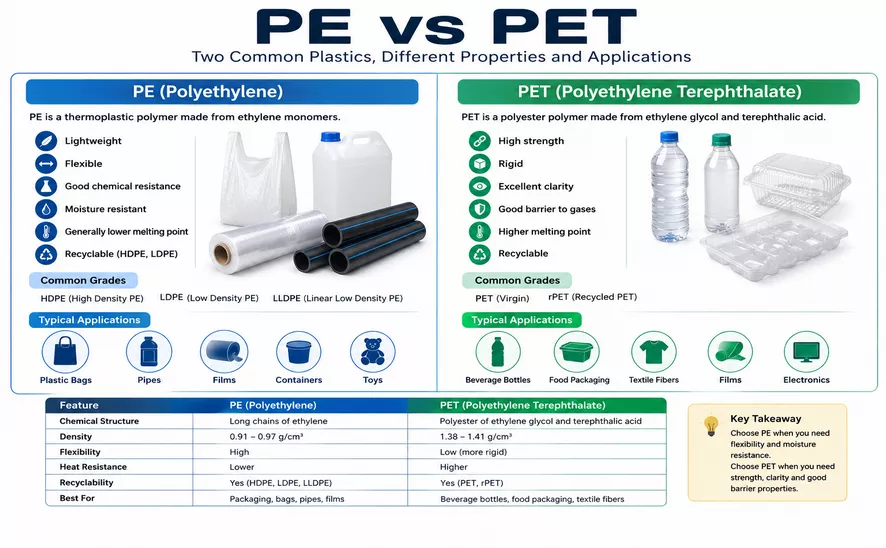
The choice between PE and PET mainly depends on the final application and required properties. PE is commonly preferred for flexible packaging, films, pipes, and containers, while PET is widely used for clear bottles, food packaging, and applications where higher rigidity and transparency are important. The following table provides a quick comparison of the two materials.
| Property | Polyethylene (PE) | Polyethylene Terephthalate (PET) |
|---|---|---|
| Density | 0.91–0.97 g/cm³ | Approximately 1.38 g/cm³ |
| Strength | Good impact resistance and toughness | Higher tensile strength and rigidity |
| Transparency | Usually translucent or opaque | Clear and highly transparent |
| Recyclability | Recyclable; commonly identified as #2 or #4 | Recyclable; commonly identified as #1 |
| Applications | Films, bags, pipes, containers, bottles, and industrial products | Water bottles, food packaging, beverage containers, and textile fibers |
| Cost | Generally lower | Generally higher |
| Flexibility | Generally high, depending on grade | Generally low to moderate |
| Chemical Resistance | Excellent | Good |
How Polyethylene Is Recycled
Polyethylene recycling generally begins with the collection and sorting of used plastic products according to their type and quality. The material is then cleaned to remove contaminants, shredded into smaller pieces, and processed into recycled plastic flakes or pellets. These recycled materials can be used to manufacture new products, depending on their quality and intended application.
Mechanical recycling is the most common approach for PE, but the quality of the material can decrease after repeated processing. For this reason, recycled polyethylene is often used in products such as garbage bags, pipes, containers, pallets, and construction materials, while applications requiring strict performance or purity may require virgin PE.
Disadvantages of PE
So far, we have mainly discussed the advantages of PE, but it also has some limitations. Polyethylene generally has lower heat resistance than materials such as PET and engineering plastics, and some grades can have limited stiffness and strength at elevated temperatures. It can also degrade under prolonged exposure to UV radiation unless properly stabilized, while its low surface energy can make printing, painting, and adhesive bonding more difficult without surface treatment.
Polyethylene Price
The price of polyethylene can vary depending on the grade, specifications, market conditions, and delivery destination. Unlike a fixed price, PE pricing is influenced by several factors, including the type of resin, density, Melt Flow Index (MFI), crude oil and feedstock prices, supply and demand, packaging, and country of origin.
What Affects Polyethylene Price?
- Grade: HDPE, LDPE, LLDPE, and other grades have different market prices.
- Density: Density and molecular structure can affect both performance and pricing.
- Melt Flow Index (MFI): Different processing requirements can influence the value of a specific grade.
- Oil & Feedstock Prices: Changes in crude oil and petrochemical feedstock prices can affect PE production costs.
- Supply & Demand: Global production, demand, and market availability influence market prices.
- Packaging: Packaging type, bagging, and palletizing requirements can affect the final cost.
- Country of Origin: Production origin, freight costs, trade conditions, and import requirements can influence the delivered price.
Looking for a reliable polyethylene supplier? Nowfel FZC supplies PE grades to customers in more than 60 countries. Contact our sales team with your required grade, quantity, and destination to receive a current quotation.
Why Choose Us as Your Polyethylene Supplier?
Choosing the right supplier involves more than simply finding a competitive price. Product specifications, documentation, logistics, and communication can all affect the efficiency of an international purchase. Nowfel FZC supports customers throughout the sourcing and export process, from product selection to shipment coordination.
- Wide Range of Grades: HDPE, LDPE, LLDPE, and other polyethylene grades.
- Product Specifications: Support with technical specifications and grade selection based on application requirements.
- Quality Control: Products supplied according to agreed specifications and quality requirements.
- Export Documentation: Assistance with the documentation required for international shipments.
- International Logistics: Coordination of shipping and delivery requirements for different destinations.
- B2B Support: Dedicated assistance with quotations, orders, documentation, and shipment coordination.
- Reliable Communication: Clear communication throughout the purchasing and export process.
For more information or to purchase Polyethylene, feel free to contact us by email. Our sales and support team will get back to you as soon as possible and assist you with your requirements.
Frequently Asked Questions
sourse: shimidox.com/polyethylene