
Nowfel Insights
Two Industrial Giants That Are Often Confused


Have you ever wondered what the difference between a refinery and a petrochemical plant is? Do you know what products each one produces and which plays a more important role in a country’s economy?
In this article, we will take a closer look at two industrial giants that are often confused with one another: refineries and petrochemical plants. We will explain how they work, what products they produce, and, most importantly, answer the question: What is the difference between a petrochemical plant and a refinery? So, let’s explore the differences between these two major industries.
What Is a Refinery?
A refinery is an industrial facility that processes crude oil or, in some cases, natural gas and converts it into useful and commercially valuable products. Crude oil, as extracted from underground reservoirs, is a complex mixture of hydrocarbons and cannot be used directly for most applications. The primary role of a refinery is to separate, treat, and convert these different components into fuels and other useful petroleum products.
How Does the Refining Process Work?
In a refinery, crude oil passes through a series of processing units. The most important stages generally include:
- Distillation: Crude oil is heated and fed into tall structures known as distillation columns. Based on differences in boiling points, the crude oil is separated into various fractions such as gases, gasoline, kerosene, diesel, and fuel oil.
- Cracking: Heavy hydrocarbon molecules are broken down into smaller, lighter, and more valuable molecules. For example, heavier fractions can be converted into products such as gasoline and LPG.
- Purification: Impurities and unwanted compounds, particularly sulfur-containing compounds, are removed from petroleum products. This helps reduce emissions and improve product quality while minimizing corrosion.
- Blending: Different refined products or components are mixed in carefully controlled proportions to achieve the required specifications and quality standards for use in vehicles, industrial applications, and other sectors.
Now that we understand how a refinery works, you may be wondering: what does a refinery produce?
Main Products of Refineries
Refineries typically produce a wide range of petroleum products, including:
- Gasoline
- Diesel fuel
- Kerosene
- Fuel oil
- Liquefied Petroleum Gas (LPG)
- Naphtha – an important feedstock for many petrochemical plants
- Bitumen
- Other heavy petroleum products
What Is the Role of Refineries in Industry and Everyday Life?
The answer is probably much easier now. Without refineries, many of the fuels used for transportation, heating, and power generation would not be available in their usable forms. In simple terms, refineries are the backbone of the energy industry. They transform crude oil into usable products that fuel cars, trucks, aircraft, power plants, and industrial facilities. They also supply important feedstocks, such as naphtha, for the chemical and petrochemical industries.
Now that we have a clear understanding of refineries, let’s move on to the other major player: the petrochemical industry.
What Is a Petrochemical Plant?
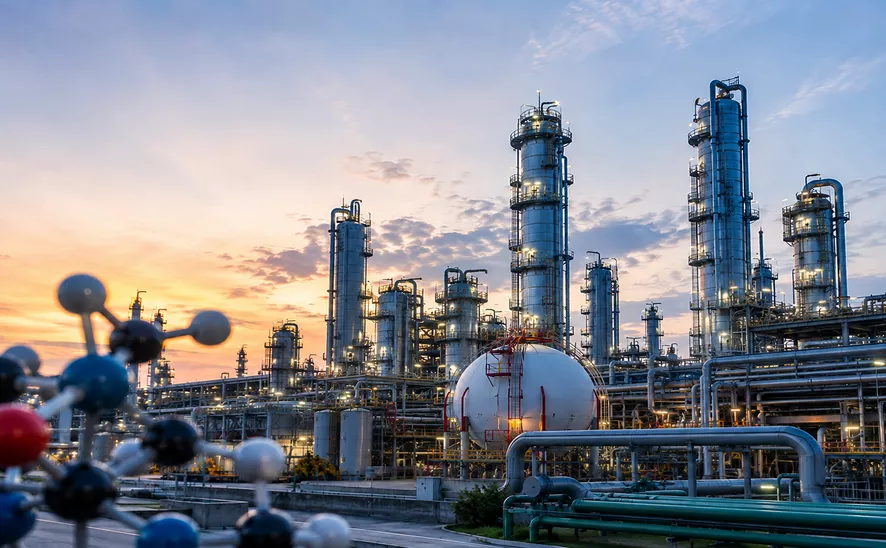
The petrochemical industry is a branch of the chemical industry that uses crude oil, natural gas, and petroleum-refining products as feedstocks to produce chemicals and chemical compounds that serve as the building blocks for thousands of products we use in everyday life.
In simple terms, if we consider a refinery the heart of the energy industry, a petrochemical plant is the engine of the chemical industry—a place where relatively simple hydrocarbon feedstocks are transformed into valuable chemicals and materials with much higher added value.
Petrochemical Feedstocks and Raw Materials
Petrochemical plants typically obtain their feedstocks from refineries or natural gas processing facilities. The most important feedstocks include:
- Ethane, methane, propane, and butane(derived from natural gas)
- Naphtha (obtained from refineries)
- Light gas oil and LPG
These feedstocks are processed in different petrochemical units and converted into basic chemical building blocks such as ethylene, propylene, benzene, toluene, and xylenes. These are generally referred to as basic petrochemical products.
These basic petrochemicals serve as starting materials for a wide range of downstream chemicals, polymers, resins, and other industrial products. Depending on the production route, these downstream products can include materials such as polyvinyl alcohol (PVA), isopropyl alcohol, acetone, petrochemical resins, and other specialty chemicals.
How Does the Petrochemical Production Process Work?
Unlike a refinery, where separation and conversion of crude oil fractions are the primary operations, petrochemical production involves chemical reactions that change the molecular structure of the feedstocks to create new compounds. The main processes include:
- Cracking: In a steam cracker, for example, hydrocarbons such as naphtha or ethane are heated to very high temperatures and broken down into smaller molecules, primarily ethylene and propylene.
- Synthesis: Simple compounds such as ethylene are reacted with other substances to produce new chemical compounds. For example, ethylene can first be converted into ethylene oxide, which is then used to produce ethylene glycol.
- Polymerization: During this process, small molecules such as ethylene or propylene are joined together to form long molecular chains, producing polymers such as polyethylene and polypropylene.
what does a petrochemical plant produce?
Petrochemical plants produce a wide range of products that are present throughout our everyday lives.
Polymers and Plastics
- Polyethylene (PE)
- Polypropylene (PP)
- Polyvinyl Chloride (PVC)
- Polystyrene (PS)
- Polyvinyl Alcohol (PVA)
- Petrochemical resins
- polyethylene terephthalate(PET)
Fibers and Synthetic Rubber
- Nylon
- Polyester
- Synthetic rubber
- Gum rosin / Rosin resin
Industrial Chemicals
- Methanol
- Ethylene glycol
- Ammonia
- Acetic acid
- Isopropyl alcohol
- Acetone
- Cyclohexanone
- Bermocoll
- Desmodur
- Chlorinated paraffin
- Methylene chloride
Resins, Detergents, and Coatings
This category includes various resins, detergents, coatings, and specialty chemical products used across different industrial applications, including anti-skinning agents and Aerosil fumed silica.
Chemical Fertilizers
Petrochemical and related chemical industries also produce important agricultural products such as:
- Urea
- Nitrates
- Phosphates
In short, petrochemicals are involved in the production of countless products we encounter every day. From plastic water bottles and automotive components to synthetic fibers used in the clothes we wear, many of the materials around us are directly or indirectly derived from petrochemical feedstocks.
How Do Refineries and Petrochemical Plants Supply the Chemical Industry?
Refineries and petrochemical plants form the foundation of a much larger chemical value chain that extends from crude oil and natural gas to the industrial materials used in everyday products. A simplified version of this value chain can be represented as:
Crude Oil / Natural Gas → Refinery & Gas Processing → Petrochemical Feedstocks → Basic Chemicals → Intermediates → Downstream Chemicals → Industrial Products
Refineries supply important feedstocks such as naphtha, LPG, and other petroleum fractions, while natural gas processing facilities can provide feedstocks such as ethane, propane, and butane. These materials are then used by petrochemical plants to produce basic chemicals such as ethylene, propylene, benzene, toluene, and xylenes. These basic chemicals serve as building blocks for a wide range of downstream products, including polymers, solvents, alcohols, resins, coatings, adhesives, and specialty chemicals. Many of these materials are essential raw materials for industries such as plastics, paints and coatings, construction, automotive, packaging, textiles, and manufacturing.
Where Do Chemical Trading Companies Fit into This Value Chain?
The chemical value chain does not end at the petrochemical plant. Chemical traders, importers, exporters, distributors, and suppliers play an important role in connecting producers with industrial customers in different markets. Depending on the product and market, these companies may source materials from manufacturers and suppliers, manage international logistics and documentation, arrange appropriate packaging and transportation, and supply chemical raw materials to manufacturers based on their grade, specifications, quantity, packaging requirements, and destination.
This makes the trading and distribution sector an important link between chemical producers and downstream industries. For businesses that cannot source certain materials directly from manufacturers, reliable chemical suppliers can provide access to products from different production regions and help simplify international procurement.
For industrial buyers, understanding this value chain is useful because the origin of a chemical product, its feedstock, production process, grade, and supply route can all affect its quality, availability, specifications, and price.
From Crude Oil to Final Products
Crude oil cannot be used directly in most industrial applications or in everyday life. As mentioned earlier, it first enters a refinery, where processes such as distillation and cracking transform it into intermediate products such as naphtha, LPG, light gas oil, and heavy gas oil. Among these products, naphtha and various hydrocarbon gases are important feedstocks for petrochemical plants.
At petrochemical facilities, these feedstocks undergo chemical reactions and molecular conversion processes to produce basic petrochemicals such as ethylene, propylene, benzene, and toluene. These basic products are then processed further in downstream industries to produce higher-value products such as plastics, polymers, resins, solvents, and alcohols.
For example:
- Crude oil → Naphtha → Ethylene → Polyethylene
- Propylene → Isopropyl alcohol or Acetone
- Benzene → Cyclohexanone or Desmodur
What Is the Difference Between Refineries and Petrochemical Plants?
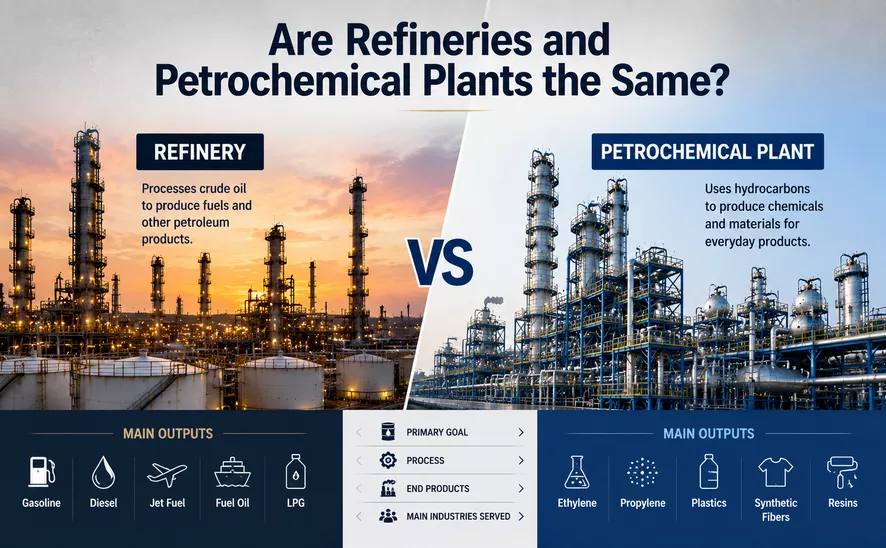
We have finally reached the main point of this article: what is the difference between a refinery and a petrochemical plant? The key difference lies in their primary focus. Refineries mainly focus on producing fuels and petroleum products. They process and separate crude oil using processes such as distillation and conversion to produce products such as gasoline, diesel, kerosene, jet fuel, and other petroleum products.
Petrochemical plants, on the other hand, primarily focus on producing chemical feedstocks and materials used to manufacture industrial and consumer products. These facilities transform hydrocarbons into basic chemicals and then into higher-value products such as plastics, polymers, resins, solvents, synthetic fibers, and other specialty chemicals.
Are Refineries and Petrochemical Plants the Same?
No. Although refineries and petrochemical plants are both important parts of the oil and gas value chain, they have different primary objectives. Refineries primarily process crude oil to produce fuels and petroleum products, such as gasoline, diesel, kerosene, LPG, naphtha, and bitumen. Petrochemical plants, on the other hand, use feedstocks from refineries, natural gas processing, and other hydrocarbon sources to produce basic chemicals, intermediates, polymers, and other downstream products.
In simple terms, a refinery mainly focuses on converting crude oil into usable fuels and petroleum products, while a petrochemical plant focuses on converting hydrocarbon feedstocks into chemical building blocks and higher-value materials used in a wide range of industries. The following table provides a quick comparison of the key differences between refineries and petrochemical plants.
| Feature | Refinery | Petrochemical Plant |
|---|---|---|
| Raw Material | Crude oil | Natural gas or refinery products |
| Process Type | Separation and purification | Chemical reactions and synthesis |
| Main Objective | Fuel production | Production of chemical industry feedstocks |
| Products | Gasoline, diesel, kerosene, naphtha, LPG, bitumen | Plastics, polymers, resins, solvents, fertilizers, alcohols |
| Value Added | Moderate | Very high |
The Role of Refineries and Petrochemical Plants in the Economy
Refineries and petrochemical plants play an important role in economic growth by creating direct and indirect employment across manufacturing, engineering, logistics, and related industries. These industries also support international trade by enabling the export of refined petroleum and petrochemical products. By converting crude oil and natural gas into processed and higher-value products, they contribute to industrial development and value creation.
The Future of Refineries and Petrochemical Plants
The world is changing, and the oil and gas industry is gradually moving beyond simply producing fossil fuels toward the production of chemicals and higher-value products. Emerging technologies, including advanced catalytic processes and artificial intelligence for production optimization, are improving efficiency and reducing waste. At the same time, the growing use of renewable and cleaner energy sources can help reduce the environmental impact of these industries.
In this changing environment, refineries and petrochemical plants can work together to produce a wider range of higher-quality products and help drive the economy toward sustainable industrial growth and greater value creation.
Final Conclusion
Refineries and petrochemical plants are both essential parts of the oil and gas value chain, but they serve different purposes. Refineries primarily process crude oil into fuels and intermediate petroleum products, providing energy and feedstocks for various industries. Petrochemical plants, on the other hand, transform these feedstocks and other hydrocarbon resources into chemicals and higher-value products that are widely used in everyday life and across numerous industries.
Close cooperation between these two industries makes it possible to produce a wider range of higher-quality products while maximizing the economic benefits of natural resources. In simple terms, refineries provide energy and basic feedstocks, while petrochemical plants use these resources to create greater added value, helping pave the way for sustainable industrial and economic growth.
We hope this article has provided a clear and comprehensive explanation of the difference between refineries and petrochemical plants.
Frequently Asked Questions About Refineries and Petrochemical Plants